


01
Capture the Consultation
Securely record the doctor–patient conversation or ingest an existing consultation transcript as the source material.
An AI clinical scribe that turns consultation audio into structured, review-ready medical records, helping clinicians reduce documentation time and focus more on patients.
Problem
Administrative burden is one of the biggest challenges in daily clinical practice. Research shows that physicians spend around 3.4 hours interacting with electronic health record (EHR) systems for every 8 hours of scheduled patient time, with roughly 2.3 hours of that dedicated to documentation alone — nearly a third of a physician's total working day. Outside of working hours, doctors still spend close to 2 hours a day finishing pending medical notes.
This burden splits a doctor's attention between examining the patient and typing notes on a screen. In many healthcare facilities, doctors have to manually record history, complaints, and examination findings into various templates such as SOAP, often while still talking to the patient or immediately after the session ends. As a result, the examination process slows down, medical records are prone to being incomplete, and the risk of burnout among medical staff increases.
Our Approach
AI Clinical Scribe is Randstack's solution that turns patient consultation recordings — whether audio or transcribed consultation sessions — into a structured medical record draft, automatically. The system listens to the conversation between doctor and patient, understands the clinical context within it, and organizes it into commonly used medical documentation formats, such as SOAP (Subjective, Objective, Assessment, Plan), or other templates based on the institution's needs.
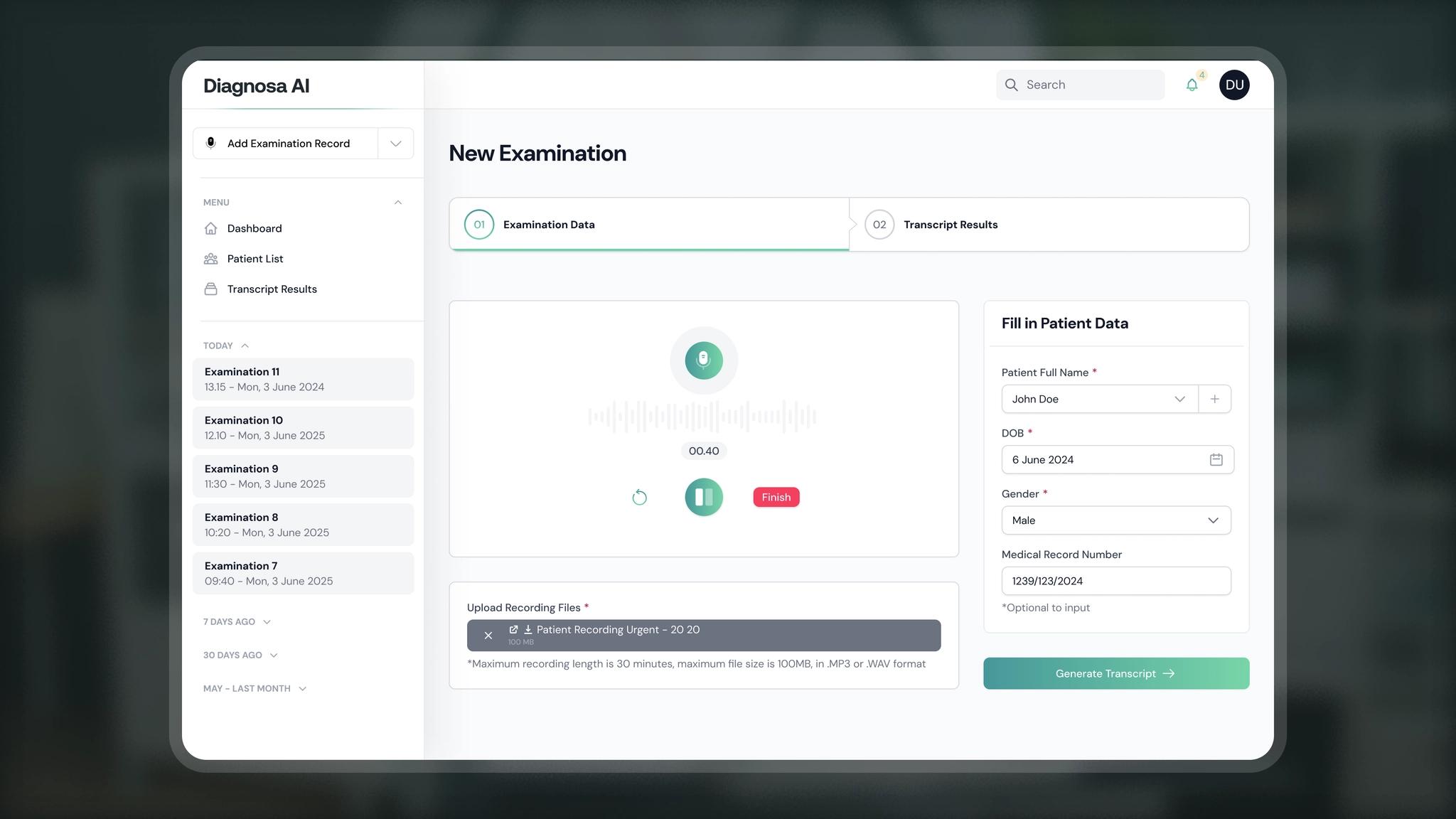
This solution is designed so doctors and medical staff can stay fully focused on the patient throughout the examination, without needing to stop and type or organize notes on a tab or computer repeatedly. Once the session ends, the system produces a medical record draft that is ready to be reviewed, edited, and signed off by the doctor — so documentation happens in parallel with the examination, not as an extra step afterward.
Why
Hospitals and clinics use this solution because manual documentation often slows down the examination workflow and reduces face-to-face time between doctor and patient. By automating transcription and medical record compilation, doctors can see more patients in the same amount of time without sacrificing the quality of interaction or the completeness of documentation.
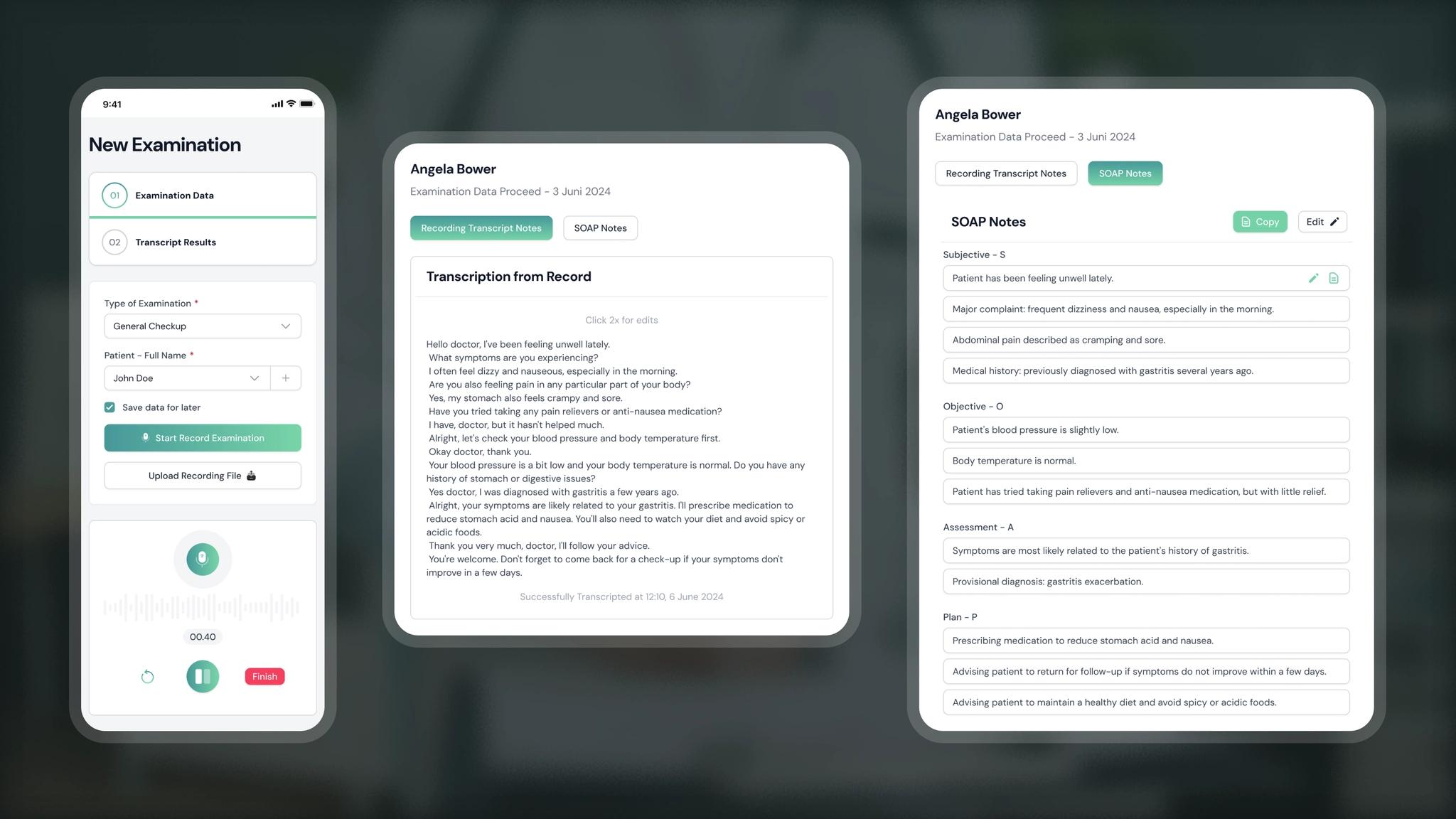
This solution also turns the medical record into a consistent Source of Truth, since notes are built directly from the actual consultation conversation, rather than from the doctor's memory or a manual summary afterward. This helps reduce documentation errors, speeds up patient handover between medical staff, and supports compliance with clinical documentation standards.
Documentation Time per Consultation
~70%
faster vs. manual documentation
Medical record drafts are compiled automatically during or immediately after the examination, cutting the time doctors typically spend manually typing notes.
Time Spent with Patient
~2 hours/day
of face-to-face time returned to patients
Based on industry research, doctors lose around 2 hours per day to documentation outside working hours; this time can potentially be redirected back to direct patient interaction.
Documentation Completeness
~95%
of required clinical elements captured automatically
Key elements such as complaints, history, examination findings, and follow-up plans are auto-filled from the conversation, reducing the risk of incomplete medical records.
Handover & Review Time
~50%
faster patient handover
Structured, consistent medical records speed up review and handover between medical staff, since information is available in a uniform format.
Methodology
01
Securely record the doctor–patient conversation or ingest an existing consultation transcript as the source material.
02
Convert speech to text, distinguish speakers, and identify complaints, history, findings, and other clinically relevant context.
03
Organize extracted clinical details into SOAP or another institution-specific template during or immediately after the consultation.
04
Let the doctor review, edit, and confirm the draft before signing it off and adding it to the clinical record workflow.
Result
Doctors often have to type complaints, history, examination findings, and plans into multiple templates by hand. AI Clinical Scribe captures these details from the consultation and organizes them into a structured draft automatically.
Typing notes while speaking with a patient splits the doctor’s attention and reduces face-to-face interaction. The solution documents in parallel so clinicians can stay focused on the examination and conversation.
Pending notes often follow doctors beyond scheduled patient hours and add to burnout. A review-ready draft produced immediately after the session reduces the administrative work left for later.
Manual summaries can miss required clinical elements and vary between practitioners. Structured SOAP or institution-specific templates improve completeness and make documentation more consistent.
Reconstructing a consultation from memory increases the risk of omissions, inaccuracies, and duplicate entry. Drafting directly from the recorded conversation creates a clearer source for the doctor to verify.
Unstructured or delayed notes make it harder for other medical staff to review a case quickly. Uniform, structured records surface the key information needed for faster handover and follow-up.
Contact Us
Let’s shape your AI clinical scribe idea into a focused validation track.